Maria Tori
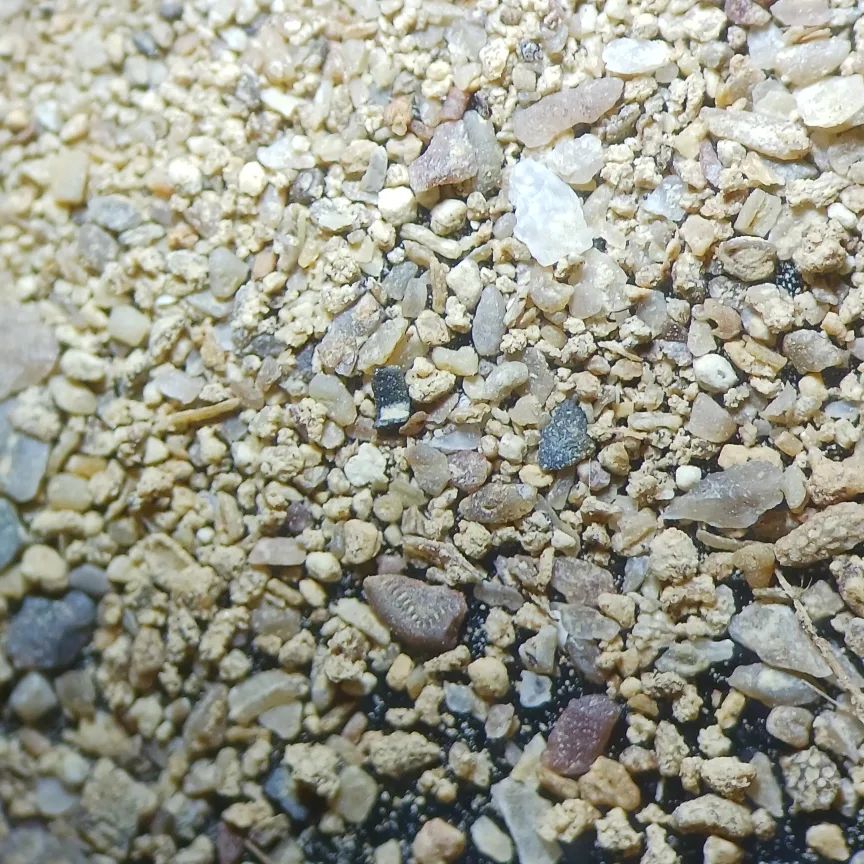
Long Run Lake in Louisville, KY is an excellent place to find fossils (collect responsibly), kayak or paddleboard, and enjoy some peace and connect with nature. I often bring my dog, Georgia, to romp around in the grasses and go swimming in the lake water.
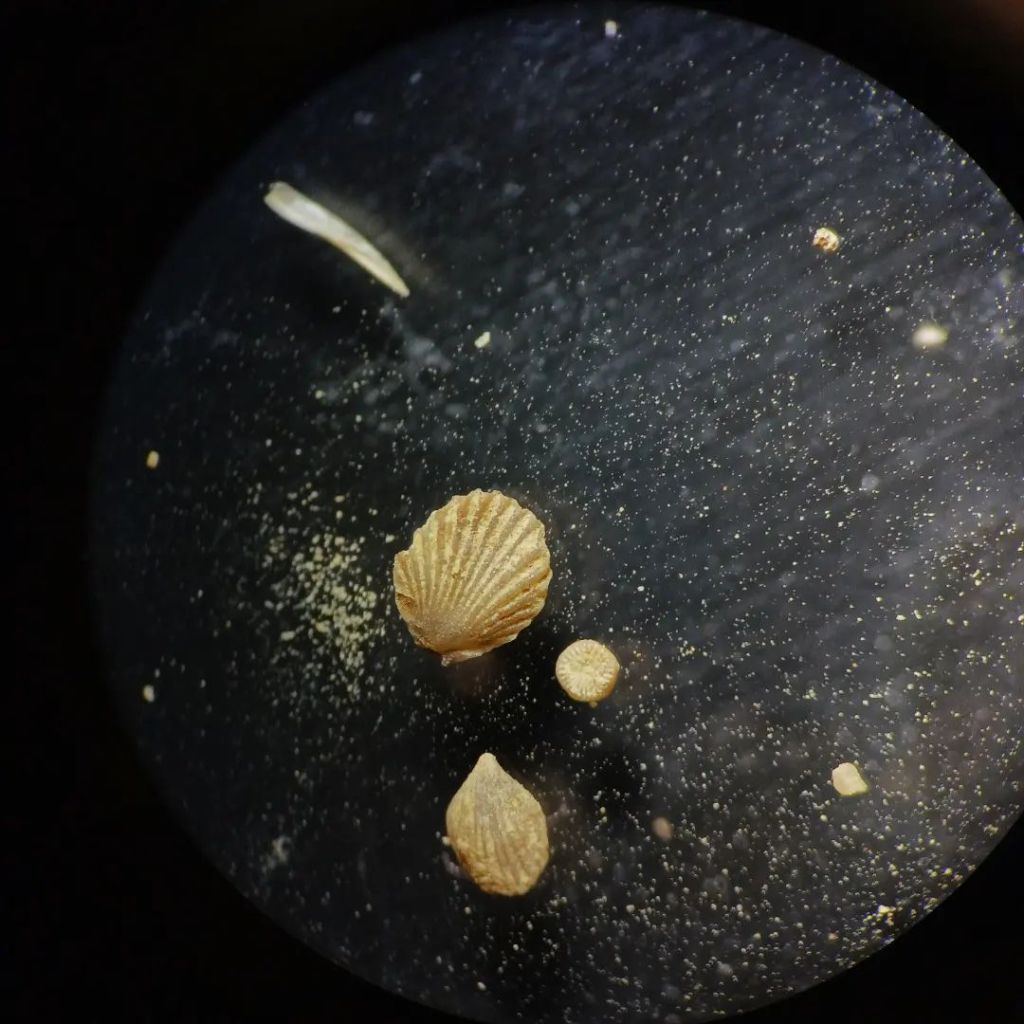
Uniquely, this sand has many tiny fossil fragments barely visible to the naked eye. Some of the fossils in the mix are actually intact fossils that were that small at time of fossilization (when it went from critter to rock). In the second image with the black background, you can see three tiny, sand-sized fossils I isolated from the group. From top to bottom, they look like a species of brachiopod, crinoid, and clam. In the main mixture of sand, you can see fragments of more of the same, plus what look to be bryozoan, maybe even an echinoderm plate. See blog post on Kentucky Fossils for more information.
In addition to the exciting and more uncommon fossils in the sand, we also see limestone that has been eroded to sand-sized sediment. This is different than our other Kentucky sand samples that are largely composed of quartz. This is because a lake will have sand composed of a parent rock very local to it given that there isn’t sediment transported in like sand you would find near a river or ocean. Lake sand will be limited to what is near by. Limestone is the major bedrock in this area, and the fossil fragments found will also be true to the area, no transport involved.
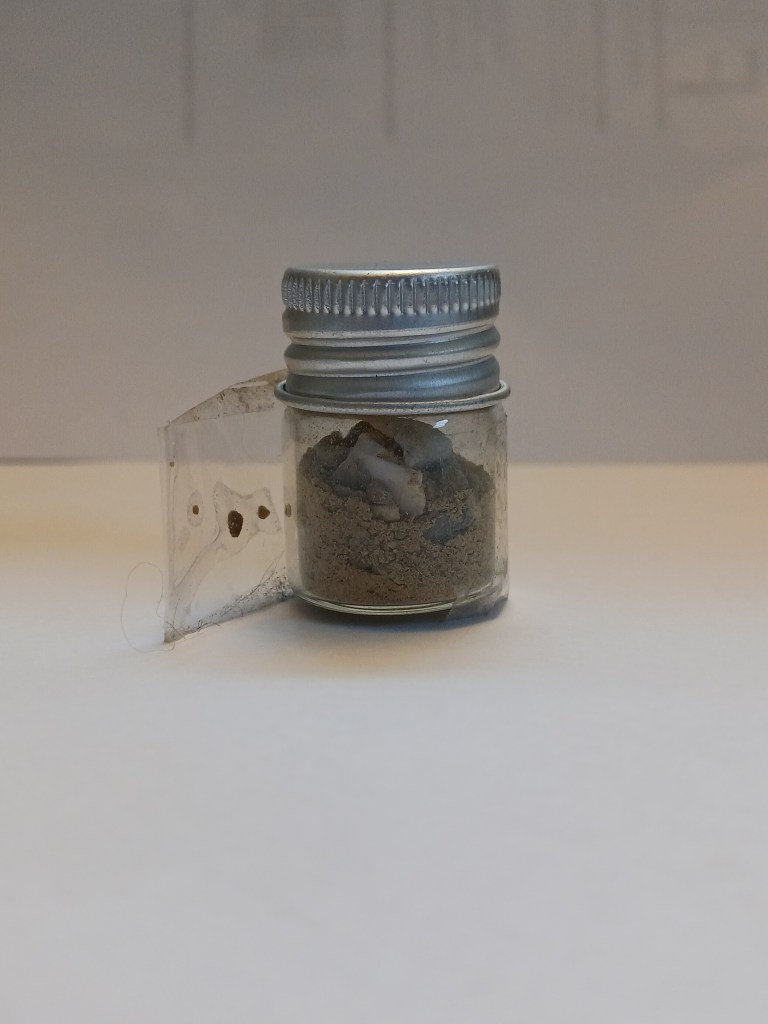
 Portrait of Sand